
healthy eating diet for weight loss
Healthy Eating for Weight Loss During Midlife: A Flexible Meal-Building Guide

Choose a repeatable eating pattern, not a fad diet
A healthy eating approach for weight loss is a repeatable pattern of meals and routines, not a short list of forbidden foods or a menu built around one ingredient. The CDC identifies healthy weight loss as a lifestyle that includes healthy eating patterns, regular physical activity, enough sleep, and stress management. That definition gives you room to build meals that fit your preferences, schedule, culture, appetite, and energy rather than forcing every day to look the same.
A balanced diet can help preserve health and may help reduce symptoms, while energy, nutrient, and fluid needs should match factors such as age, nutritional status, physical activity, and disease. In practical terms, start with foods that provide nourishment across the meal: a protein source, produce or another fiber-rich choice, a satisfying source of carbohydrate, and fluids that suit your usual routine. The balance matters more than giving the plan a fashionable name.
This guide helps you make general meal and routine decisions. No out of scope parts are included: this guide does not set an individualized calorie target, prescribe medication or supplements, diagnose a condition, or promise a particular amount or rate of weight loss. Your goal is a flexible structure that you can repeat, adjust, and observe over time.
Why weight changes may feel different during this transition
A practical guide for gynecologists states that achieving clinically significant weight loss can be more challenging for women during this transition because of several factors. That finding does not mean that nutrition explains every change or that a difficult week reflects a lack of effort. It means your plan may need to account for changing sleep, appetite, mood, energy, activity, and daily demands rather than treating weight as a simple food equation.
A useful weight-management review starts with three questions. First, what foods and portions leave you satisfied? Second, which routines remain workable when sleep or energy is poor? Third, has something changed enough to warrant clinical discussion? This approach keeps a single weigh-in, craving, or difficult day from deciding whether your entire plan is working.
Build meals from a balanced base
A balanced meal begins with several food roles rather than a rigid ratio. The nutrition review emphasizes balanced eating and matching energy, nutrient, and fluid needs to your broader health context. You can translate that principle into a simple meal-building sequence.
Use the sequence as a decision test, not a checklist that makes every meal complicated. Ask which role is already covered, which role is missing, and whether adding it would make the meal more complete or workable. A protein food can be paired with different produce, fiber-rich choices, carbohydrates, flavors, and drinks depending on what is available. The food does not need to be prepared in a particular way, and no single option is required. If a full combination is not practical, make the smallest useful adjustment you can and return to the broader pattern at the next eating opportunity. This keeps portion awareness and meal balance connected to real decisions rather than turning one imperfect meal into a reason to abandon the plan.
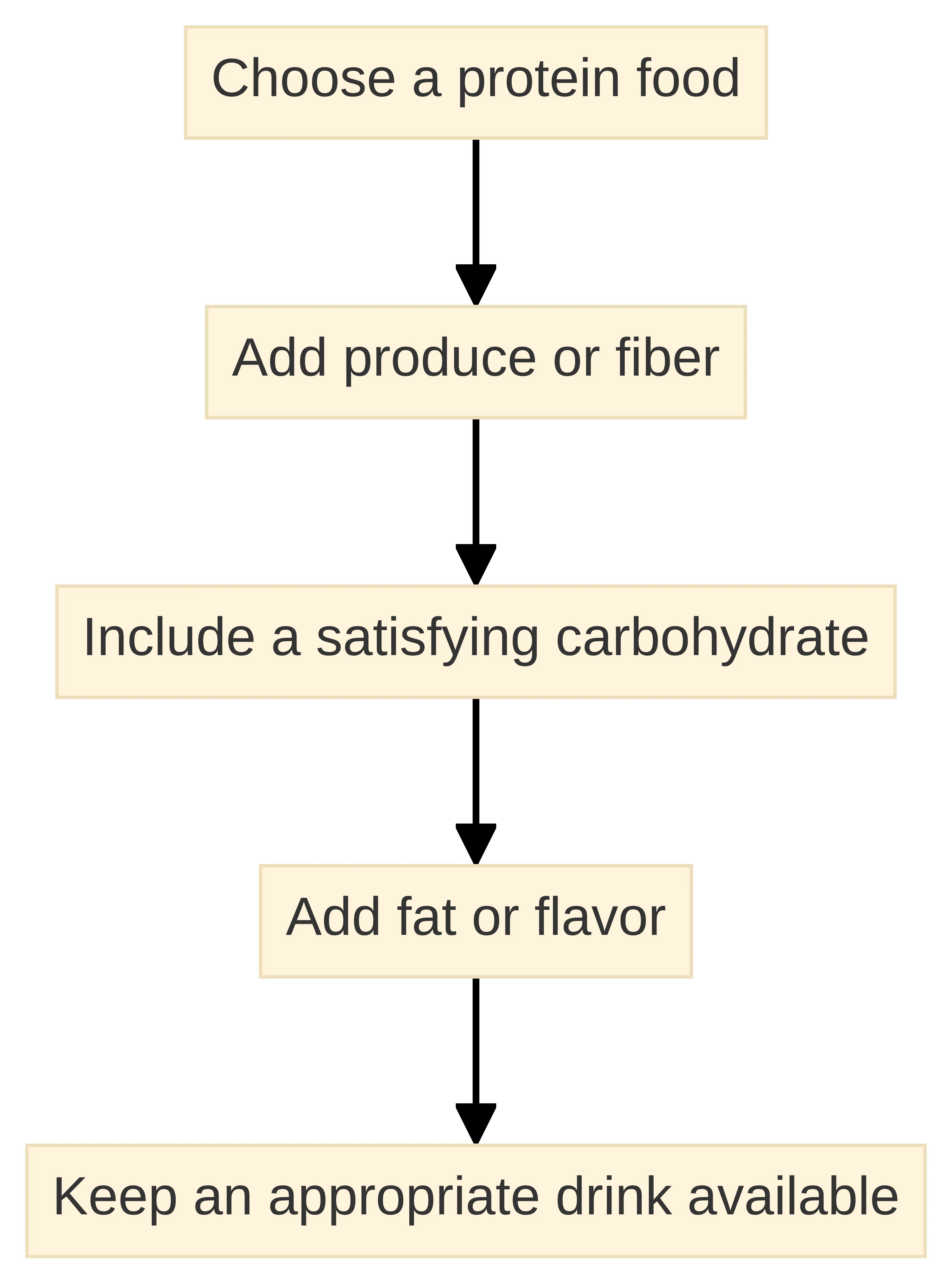
A five-part meal sequence can help you assemble food without following a fixed menu:
- Choose a protein food, such as eggs, yogurt, fish, poultry, tofu, tempeh, beans, lentils, or another option that fits your eating pattern.
- Add produce or another fiber-rich choice, such as vegetables, fruit, beans, lentils, oats, or a whole-grain food.
- Include a satisfying carbohydrate when it helps the meal feel complete, such as potatoes, rice, corn, oats, or whole-grain bread.
- Add a source of fat or flavor that makes the meal enjoyable, such as nuts, seeds, avocado, olive oil, or a sauce you can use comfortably.
- Keep an appropriate drink available and let thirst, your usual routine, activity, and clinical advice guide fluid choices.
The meal sequence is a planning tool, not a requirement to include every item at every sitting. For breakfast, that might mean yogurt with fruit, oats, and seeds. For lunch, it could mean a bean and vegetable bowl with rice. For dinner, it might be fish or tofu with vegetables and potatoes. These examples show how to combine food roles; they do not create a personal prescription.
Portion awareness can stay practical without turning meals into a weighing exercise. Serve a reasonable amount, eat at a pace that lets you notice satisfaction, and pause before automatically adding more. If you remain hungry, add food deliberately rather than treating hunger as a failure. If a portion feels too large on a low-appetite day, save part for later or assemble a smaller version of the same balanced meal.
The nutrition review highlights protein along with calcium, vitamin D, vitamin C, and B vitamins as nutritional considerations during this stage of life. You do not need to turn that list into a supplement plan. Use it as a reminder to vary your food choices and bring persistent concerns about intake, appetite, or restrictive eating to a qualified clinician.
A simple meal map can make this framework easier to use: keep two or three protein foods, several produce or fiber-rich choices, a few convenient carbohydrates, and more than one quick meal combination available. The map is useful when you are shopping or deciding what to prepare. It reduces the number of decisions without requiring the same breakfast, lunch, or dinner every day.
Use protein as one part of the meal
Protein can occupy one place in a balanced meal, but protein alone is not a complete weight-loss plan. A review of 24 controlled feeding trials involving 1,063 adults with overweight or obesity, ages 18 to 80, compared higher-protein diets providing 27% to 35% of daily energy from protein with lower-protein diets providing 16% to 21%. The review examined controlled diets, not a universal menu for daily life.
The higher-protein diet review reports greater weight loss despite a similar energy deficit, with a mean difference of −0.79 kg and a 95% confidence interval from −1.50 to −0.08 kg. The same review reported more lean-mass preservation during energy restriction, with a mean difference of +0.43 kg and a 95% confidence interval from 0.09 to 0.78 kg. These are study-level averages, not the amount you should expect or pursue.
A separate nutrition review states that protein intake should be 0.8–1–1.2 g/kg/day, with half coming from plant sources, while also highlighting calcium, vitamin D, vitamin C, and B vitamins. Treat that range as a discussion point rather than a personal target selected from an article. Your practical step is simpler: include a protein food in meals when it works for you, vary plant and animal choices according to your preferences, and keep protein connected to produce, carbohydrates, and fluids.
Protein choices can be judged by preparation time, cost, taste, digestion, cultural fit, and how the food works with the rest of the meal. A ready-to-eat yogurt, beans added to soup, eggs with whole-grain toast, tofu in a stir-fry, or leftover chicken with vegetables can all serve the same planning role. The useful question is not whether one protein source is superior; it is whether the choice helps you assemble a meal you can repeat.
A complete meal gives protein a supporting role instead of making it the only feature. Pair it with a food that adds color or texture, a carbohydrate that makes the meal satisfying, and a drink that fits your routine. If a protein-heavy choice leaves you bored, uncomfortable, or unable to maintain the pattern, choose a different combination.
Adapt the framework to variable days
A flexible meal framework should survive more than your easiest day. The nutrition review recommends establishing a physiological eating schedule, while your own appetite and energy may change from morning to evening or from one day to the next. Keep the structure consistent, then adjust the size, texture, preparation, and timing of meals to match the day.
A low-appetite day calls for a smaller version of a balanced meal instead of abandoning the structure. A modest bowl of soup with beans, yogurt with fruit and seeds, eggs with toast, or a smoothie-style meal you already tolerate may feel more manageable than a large plate. Eat slowly and return to the rest later if that fits your routine. Persistent appetite loss deserves a clinical conversation rather than indefinite self-management.
A higher-appetite day is a reason to begin with the meal framework rather than trying to compensate by skipping the next meal. Add a larger serving of vegetables, fruit, beans, lentils, or another fiber-rich food; include enough protein; and notice whether the meal feels satisfying after a pause. You can also prepare a planned snack so hunger does not force an unplanned choice when you are tired or rushed.
A low-energy day can be easier when preparation demands are reduced without reducing the meal to a single food. Keep a short list of convenient combinations: prewashed vegetables with hummus and eggs, canned beans with microwaveable grains, plain yogurt with fruit and nuts, or leftover protein with frozen vegetables. Convenience is a planning feature. It does not have to mean abandoning balance.
A busy day is easier to manage when food is assembled before hunger becomes urgent. Pack a protein food, a fruit or vegetable, and a carbohydrate you can eat without much preparation. If your schedule changes, use the same components at a different time instead of treating the missed meal as evidence that the plan failed.
A backup meal plan gives you a practical response to an unpredictable schedule. Choose two meals and two snacks that require little preparation, keep their ingredients available, and use them when shopping, work, travel, or poor sleep disrupts your usual routine. The backup plan is not a second diet; it is a short list of workable combinations.
It can help to organize those choices by effort level. Keep one option that is ready with almost no preparation, one that requires brief assembly, and one that can be prepared when you have more energy. Each option can still use the same meal roles: a protein food, a produce or fiber-rich choice, a satisfying carbohydrate when useful, and an appropriate drink. When the day changes, choose the effort level that matches your capacity instead of asking whether you can follow the most elaborate plan. Review the list after using it: keep combinations that were available and satisfying, replace ingredients that repeatedly created obstacles, and avoid adding more options than you can realistically keep on hand. The value of the backup plan is reducing decisions during a difficult day while preserving the structure of the overall approach.
Use portions and eating rhythm without making meals a test
An eating rhythm gives your day a usable shape without requiring identical meal times. The nutrition review recommends establishing a physiological eating schedule and avoiding simple, fast-acting sugars during this stage of life. Apply that guidance without turning it into an all-or-nothing rule: plan regular opportunities to eat, notice how your body responds, and choose foods that keep the meal balanced.
Portion awareness works best as observation rather than punishment. Try this short check at a meal.
A short portion check can guide the next choice:
- Start with an amount that looks reasonable for your hunger and the food available.
- Eat without rushing through the first few bites.
- Notice whether hunger is easing and satisfaction is increasing.
- Add more if you remain hungry, or save part if you feel comfortably satisfied.
- Record patterns only when the record helps you make the next meal easier.
Simple, fast-acting sugars do not require labeling every enjoyable food as forbidden. Look for the pattern across the day. If sweet drinks, candy, or highly sweetened snacks regularly replace meals, pair a smaller amount with a more complete eating occasion or choose a less sweet option. The goal is a repeatable rhythm, not a test you pass or fail.
A brief meal note can contain three useful details: when you ate, what combination you chose, and how satisfied you felt afterward. Use the note to identify practical patterns, such as a long gap that leaves you rushed or a meal that does not keep you satisfied. Stop recording when it no longer helps you make a clearer next choice.
Set realistic expectations for progress
Weight change rarely follows a perfectly smooth line. That comparison is a reason to keep expectations grounded, not a target for you. Your results may differ because the reviewed populations, programs, health conditions, routines, and follow-up periods differ.
A systematic review reports that one large, higher-quality randomized controlled trial found exercise and a calorie-restricted diet may help prevent weight gain and abdominal fat gain during this transition.
Progress tracking can include more than the scale. You might track how often you assemble balanced meals, whether planned food is available on busy days, how satisfied you feel after eating, or whether your routine supports sleep and activity. These observations do not replace medical assessment, but they can show which habits are practical enough to continue.
A slower period is a reason to review the routine rather than respond with a harsher diet. Review meal composition, portion awareness, drinks, sleep, activity, and schedule before changing several things at once. If weight changes remain concerning or other symptoms appear, move from self-adjustment to a clinical discussion.
A sustainable approach also asks what you can continue after the initial effort. Keep the meal combinations, shopping habits, and backup options that fit your life, and revise the parts that create repeated frustration. Progress is easier to interpret when the plan is judged by its repeatability as well as by changes on the scale.
When you review the approach, separate three questions. Can you repeat the routine with your actual schedule? Does the meal structure leave enough room to notice hunger and satisfaction? Has a persistent symptom or unexplained change introduced a question that food choices alone cannot answer? If the routine is hard to repeat, adjust preparation, convenience, timing, or the number of decisions involved before making it more restrictive. If the structure is practical but does not feel satisfying, review the combination of protein, fiber-rich foods, carbohydrates, portions, and fluids. If the concern is persistent, significant, or unexplained, treat it as a reason for clinician discussion rather than as evidence that you need more discipline.
Know when general nutrition guidance is not enough
Unexplained or substantial weight change deserves more attention than ordinary variation. A selected clinical triage table from Queensland, Australia, lists significant weight loss of at least 10% of body weight during the previous six months, without anemia, among circumstances warranting an appointment within 30 calendar days. The same table lists unexplained weight loss of 5–10% during the previous six months among circumstances warranting an appointment within 90 calendar days.
The appointment windows in that Queensland clinical triage table are not a universal New York timetable or a substitute for assessing your symptoms. Use the underlying signal instead: a noticeable, persistent, or unexplained change should prompt you to contact a qualified clinician and describe what changed, when it began, and whether appetite, digestion, sleep, mood, pain, or energy changed with it.
Symptoms can also change the question you need to ask. NYU Langone states that its providers may recommend lifestyle changes to help relieve symptoms and improve quality of life. If sleep disruption, mood changes, hot flashes, brain fog, appetite changes, or other concerns continue despite reasonable routine changes, bring the pattern to a clinician instead of assuming food is the only explanation.
A short symptom and food record can prepare you for that discussion. Write down the timing of weight and symptom changes, your usual meal rhythm, major schedule disruptions, relevant medications, and questions about next steps. The record should support a conversation, not become another demand to manage perfectly.
A clinician discussion is especially useful when a change is persistent, significant, unexplained, or accompanied by symptoms that affect daily life. General meal guidance can still help you choose what to eat while you arrange that discussion, but it should not be used to explain away a concerning pattern.
Put weight and symptom changes in clinical context
At Misra Wellness, we offer a physician-directed medical weight loss program. We consider thyroid, hormone, and metabolic factors alongside medication in our weight loss program. That broader review matters when weight changes occur alongside symptoms or when general nutrition changes have not answered the question you are trying to solve.
Our medical weight loss program aims to improve metabolic health while building knowledge, habits, and a maintenance strategy for long-term success. We develop a realistic long-term maintenance strategy for weight loss rather than reducing the discussion to a single meal, scale reading, or short-term restriction.
General nutrition guidance can help you choose a balanced next meal without requiring a consultation. A physician-directed program addresses a different question: what additional context is needed when weight, symptoms, medication, or metabolic concerns call for individualized review? Bring your food pattern and symptom record to that discussion so the conversation starts with your actual experience.
A useful clinical conversation can connect several observations instead of treating each one separately. Bring the eating pattern you have tried, changes in appetite or energy, sleep disruption, weight changes, medications, and the questions you want answered. That context helps distinguish a practical routine issue from a concern that needs broader evaluation.
Turn the framework into your next meal and next question
At Misra Wellness, we focus on medical weight loss, hormonal and metabolic health, integrative medicine, and related midlife concerns. A qualified clinician should decide whether an individualized evaluation or treatment plan is appropriate for you.
A flexible meal-building system gives you a practical place to begin while leaving room for changing appetite, sleep, energy, and daily demands. If persistent symptoms, unexplained weight changes, or unanswered questions make general guidance insufficient, bring the pattern to a clinician-led discussion.
What should you discuss with a clinician about weight or symptom changes?
What are the core principles of a healthy eating diet for weight loss?
A healthy eating diet for weight loss focuses on balanced meals that include a protein source, fiber-rich foods, satisfying carbohydrates, and appropriate fluids. It emphasizes a repeatable meal pattern rather than a restrictive diet.
How can I build meals that fit my changing appetite and energy levels?
To build meals that accommodate changing appetite and energy, use a flexible meal framework. Start with a protein food, add fiber-rich produce, include a satisfying carbohydrate, and adjust portion sizes based on your hunger and daily demands.
When should I discuss weight changes or symptoms with a clinician?
You should discuss weight changes or symptoms with a clinician if you experience significant or unexplained weight loss, persistent changes in appetite, sleep disturbances, or other concerning symptoms that affect your daily life.
What should I consider when planning meals for weight loss?
When planning meals for weight loss, consider incorporating a variety of foods that provide essential nutrients, maintain portion awareness, and adapt to your daily energy levels and schedule.
How can I ensure my eating habits support my health during menopause?
To support your health during menopause, focus on a balanced diet that meets your nutritional needs, includes adequate protein, fiber, and hydration, and allows for flexibility based on your daily experiences.
Ready for a real plan?
Work directly with Dr. Misra — no insurance, no rush.
Misra Wellness is a virtual-first Direct Primary Care practice serving California and New York. Book a meet & greet to see if we're the right fit.
Book a meet & greet