
benefits of hrt in menopause
Benefits of HRT: What It May Help With and What to Discuss With a Clinician

Start with the symptoms you want to improve
Hormone replacement therapy may help when symptoms linked to changing hormone levels are affecting your sleep, work, comfort, or daily life. The clearest potential benefits involve hot flashes, night sweats, and genitourinary symptoms. The right question is not whether HRT is appropriate for everyone. The useful question is which symptom you want to address, what benefit is realistic, and how your personal history changes the balance.
Hot flashes and night sweats can disrupt sleep, daily function, and quality of life at home and at work. That disruption gives you a concrete reason to arrange a clinician discussion rather than relying on a general promise about hormone therapy. Write down what happens, when it happens, how often it occurs, and what it prevents you from doing. A specific symptom pattern makes the conversation more useful.
No out of scope parts are needed for this decision guide. Focus on four questions: what HRT may help, what it is not intended to prevent, which personal factors affect the benefit-risk discussion, and what you should ask before deciding.
Start with the problem you want to solve instead of starting with a product name. For example, you might want to discuss night sweats that repeatedly wake you, vaginal or urinary discomfort, or hot flashes that interrupt work. A clear goal helps you and a clinician distinguish a possible treatment benefit from a broad expectation that hormones will improve every symptom at once.
The clearest benefits are relief for hot flashes and genitourinary symptoms
Hot flashes and other vasomotor symptoms are among the clearest reasons to discuss systemic HRT. The Menopause Society’s 2022 position statement described hormone therapy as the most effective treatment for vasomotor symptoms. A professional educational course also identified systemic HRT as a first-line treatment for bothersome hot flashes and night sweats. These statements describe a treatment option for symptoms; they do not determine whether it fits your health history.
Genitourinary symptoms are another established area of potential benefit. The term covers symptoms affecting the genital and urinary areas, including concerns that may affect comfort or sexual function. The same 2022 position statement identified hormone therapy as the most effective treatment for genitourinary symptoms, and the educational course listed genitourinary syndrome among the FDA-approved indications for systemic hormone therapy. Ask which treatment approach addresses the specific symptom you want to improve instead of treating every product or route as interchangeable.
Symptom relief is the outcome to put first. If hot flashes interrupt meetings, night sweats repeatedly disturb your sleep, or genitourinary symptoms cause persistent discomfort, describe those effects directly. The treatment goal should be tied to your symptoms and discussed alongside dose, duration, regimen, and route. Those details belong in an individualized plan, not in a generic recommendation.
Systemic HRT also has FDA-approved indications that include premature menopause and prevention of postmenopausal osteoporosis, according to the educational course. That list does not mean every form of HRT addresses every symptom, or that a treatment used for one indication should be started for another. Ask what the proposed treatment is intended to address and how you will judge whether it is helping.
For your appointment, describe the symptom in practical terms: how often it occurs, how severe it feels, whether it affects sleep or work, and what you have already tried. Then ask whether systemic therapy is being considered for that symptom, whether another approach may fit better, and what improvement would count as a useful response.
Mood, sleep, sexual function, and joint pain are possible indirect benefits
Mood, sleep, sexual dysfunction, and joint pain may improve indirectly with hormone therapy, but an educational course describes these as indirect benefits rather than primary indications. That distinction keeps the expectation realistic. If your sleep is poor because night sweats wake you, symptom relief may affect sleep differently than it would if another condition were driving the problem.
Sleep changes and mood changes deserve their own description. Hot flashes and night sweats can disrupt sleep and quality of life at home and at work, so improved temperature symptoms may change how rested you feel. Mood, sexual function, and joint pain are less direct treatment targets. Tell your clinician which change is primary, which changes followed it, and which concerns remain separate.
A symptom record can help you separate direct goals from hoped-for secondary improvements. Before the appointment, note:
- the symptom you want to address first;
- when it began and how often it occurs;
- how it affects sleep, work, relationships, movement, or comfort;
- what you have already tried; and
- what improvement would be meaningful to you.
Use the record to ask whether HRT is being considered for the main symptom, for a related effect, or for a different treatment goal.
Do not use a possible indirect benefit as a substitute for evaluating a persistent problem. A sleep problem, depressed mood, sexual concern, or joint pain may need its own assessment. Bring each concern into the discussion, but keep the proposed HRT goal specific.
This distinction matters when several symptoms appear together. If hot flashes and night sweats are the main problem, ask how treating them could affect sleep. If low mood, ongoing fatigue, pain, or sexual concerns are the main problem, ask what other explanations and treatment options should be considered. A possible connection is a reason to discuss the symptom, not a reason to assume its cause.
Separate symptom treatment from disease prevention
Bone protection is a specific benefit that should be distinguished from broad disease prevention. The 2022 position statement said hormone therapy has been shown to prevent bone loss and fracture, and the educational course listed prevention of postmenopausal osteoporosis among FDA-approved indications for systemic HRT. That evidence supports a focused discussion about bone health; it does not make HRT a universal preventive treatment.
Cardiovascular protection is a different question. The 2022 position statement said hormone therapy is not government-approved for primary or secondary cardiovascular protection. Personal and family histories of cardiovascular disease, stroke, blood clots, and breast cancer should be considered before treatment. Do not choose HRT with the goal of preventing heart disease.
A benefit in one area does not erase risks in another. HRT may be discussed for bothersome symptoms and may have a bone-related role, while it is not an approved cardiovascular-protection strategy. Keep those conclusions separate when you weigh the decision. Ask your clinician to identify the intended benefit, the known limits, and the reason the proposed plan fits that goal.
A useful question is: “What problem is this treatment meant to solve for me, and what outcome would make us reconsider it?” That wording turns a broad request for hormones into a defined treatment discussion. It also makes it easier to compare HRT with nonhormonal options when the main concern is not one of the clearest HRT indications.
Keep three different goals separate during the discussion:
- relief of symptoms that are affecting daily life;
- a focused conversation about bone loss or fracture risk; and
- prevention of cardiovascular disease, which is not an approved purpose of hormone therapy.
The same treatment decision may involve more than one health concern, but each concern needs its own rationale and follow-up plan.
Age and timing change the benefit-risk discussion
Age and time since the final menstrual period are important parts of evaluating potential HRT benefits and risks. The Menopause Society’s 2022 position statement recommended risk stratification by age and time since menopause. A related position statement said that, for healthy symptomatic women younger than 60 or within 10 years of menopause onset, benefits generally outweigh risks, while potential rare risks include breast cancer, blood clots, and stroke.
That age-and-timing statement is not a personal eligibility rule. It applies to a defined group: healthy women with symptoms who are younger than 60 or within 10 years of menopause onset. Your health history, family history, treatment goal, formulation, route, dose, and duration still need review. A later start or a different health profile can change the discussion.
Bring a clear timeline to your appointment. Include the date or approximate period when symptoms began, the date of your final menstrual period if known, whether symptoms are changing, and whether you have used hormones before. If you are still having periods, describe their pattern and any unusual changes. Timing gives the clinician context; it does not produce an answer by itself.
Ask these timing questions:
- How does my age affect the potential benefits and risks?
- How does the time since my final menstrual period affect the discussion?
- Does the reason for considering HRT change the balance?
- What duration and follow-up plan would match my treatment goal?
The answer should connect timing with your symptoms and health history rather than treat age as a standalone cutoff.
Timing is one part of risk stratification, not a substitute for it. The same age range can include different treatment goals, health histories, and routes of administration. Ask the clinician to explain which facts in your history are changing the balance and which facts are simply useful background.
Personal and family history can change whether HRT is appropriate
Personal history can change the starting point for a systemic HRT discussion. A professional educational course lists unexplained vaginal bleeding, certain prior estrogen-sensitive cancers, prior stroke or heart attack, a history of or inherited high risk for blood clots, and severe active liver disease among potential contraindications. These conditions require direct review before you consider systemic hormone therapy.
Family history also belongs in the conversation. The 2022 position statement said personal and familial risks of cardiovascular disease, stroke, blood clots, and breast cancer should be considered before initiation. Family history does not answer the treatment question on its own, but it gives the clinician information needed for risk stratification.
Unexplained vaginal bleeding is a specific reason to seek evaluation before systemic HRT rather than trying to manage the symptom independently. Describe when the bleeding occurred, how much there was, and whether it followed a long period without menstrual bleeding. Do not treat unexplained bleeding as a routine symptom to cover with hormones.
Prepare the history that can change the discussion:
- personal and family history of breast cancer, cardiovascular disease, stroke, or blood clots;
- unexplained vaginal bleeding;
- liver disease;
- current medicines and supplements;
- previous hormone use; and
- any written information about a product you are considering.
Bring the actual product name and details about its formulation or route if you have them. A category label is not enough to evaluate a specific option.
A risk factor is not a diagnosis, and a symptom is not proof that HRT is appropriate. Use the history list to make the appointment more complete. Let the clinical discussion address whether the potential benefit justifies the relevant risks for your situation.
Arrange medical evaluation rather than self-treatment if you have unexplained vaginal bleeding, a history of estrogen-sensitive cancer, stroke or heart attack, a high risk of blood clots, or severe active liver disease. These concerns do not provide a treatment answer by themselves, but they can change whether systemic therapy is considered and what review is needed first.
Prepare the information a clinician needs to individualize the decision
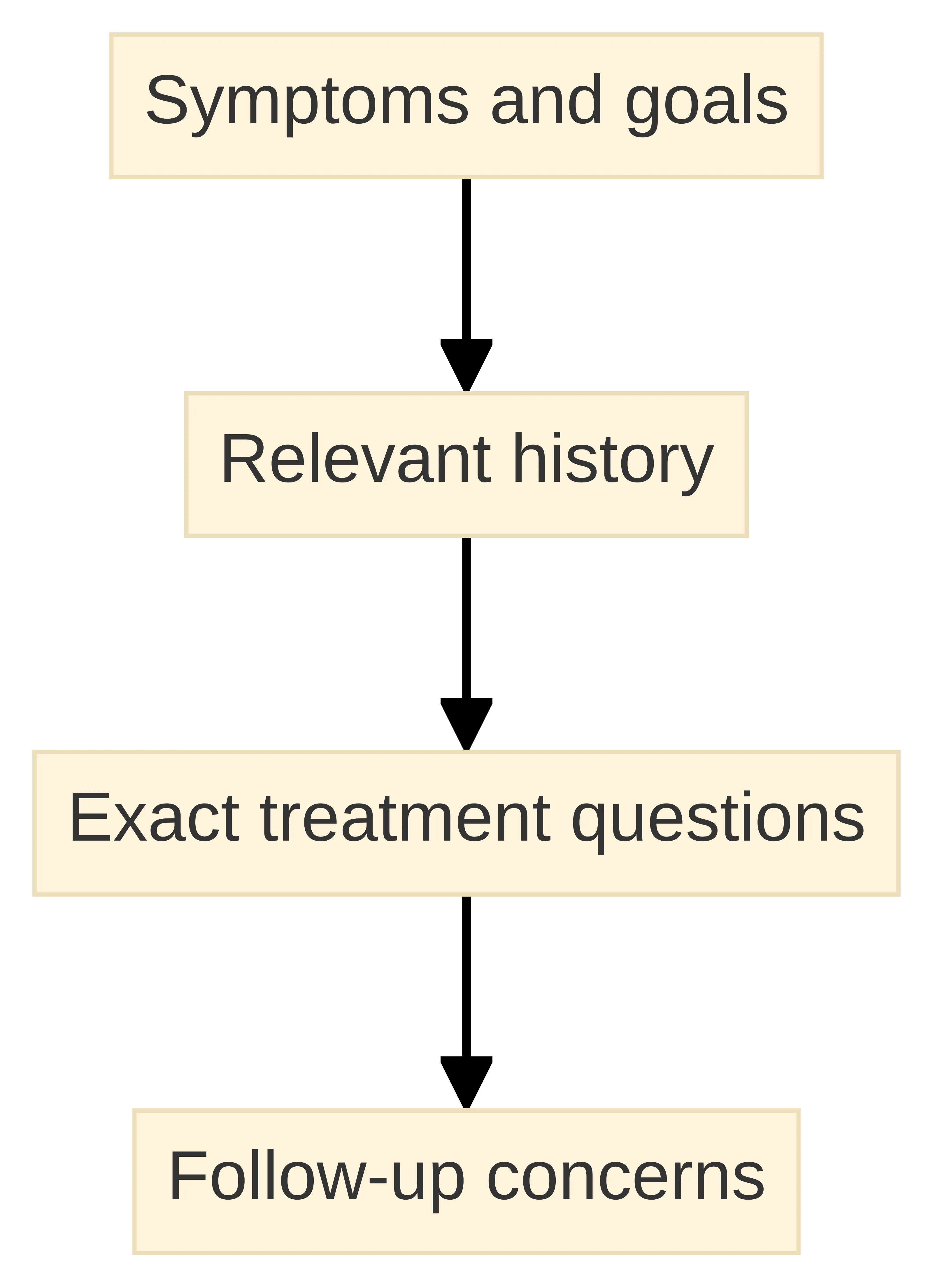
A consultation record can turn a broad HRT search into a focused discussion. The record should include your symptoms and goals; medical, family, medication, and prior-treatment history; questions about the exact product, formulation, route, and regulatory status; and follow-up or warning-sign questions. Use four short sections so you can find each detail during the visit.
Your four-part record can look like this:
- Symptoms and goals: Write the symptom you want to improve, when it began, how it affects you, and what outcome you hope to discuss.
- Relevant history: List medical and family history, current medicines and supplements, and previous hormone use.
- Exact treatment questions: Note the product name, formulation, route, and regulatory status if a specific option has been mentioned.
- Follow-up concerns: Ask how progress will be reviewed, which warning signs matter, and what would change the plan.
This organization keeps your priorities visible without turning a consultation into a product-shopping exercise.
Bring questions that test the full decision, not only the possible benefit:
- Which symptom is HRT intended to address for me?
- What alternatives could address that symptom?
- How do my age, timing, personal history, and family history affect the balance?
- What formulation, route, dose, and duration are being discussed, and why?
- What benefit should we look for, and over what period?
- What side effects or warning signs should prompt contact?
- When will we review the plan?
- What would make us continue, adjust, or stop treatment?
The 2022 position statement supports personalization with shared decision-making and periodic reevaluation, including attention to dose, duration, regimen, and route. ACOG advises discussing HRT every year, with continuation based on symptoms, risks, and benefits.
Alternatives deserve a direct question rather than an afterthought. Ask which nonhormonal approaches may fit your symptom, what each option is intended to improve, and how follow-up would work. You do not need to decide before the appointment. You do need enough information to compare the expected benefit, limits, and monitoring plan.
If your appointment is short, bring the three facts that are easiest to lose in a general conversation: the symptom affecting you most, the health history that concerns you most, and the outcome you want to discuss. Then bring the full list of medicines, supplements, prior hormone use, and family history. This order keeps the visit focused without leaving out information that could affect the decision.
Use periodic review instead of a permanent yes or no
HRT is a decision to review over time, not a permanent yes or no. The 2022 position statement recommended shared decision-making with periodic reevaluation of the benefit-risk profile, including dose, duration, regimen, and route. ACOG advises discussing hormone therapy every year; continuation depends on symptoms, risks, and benefits, and longer treatment may be needed if symptoms persist.
Track the information that will make review concrete: symptom frequency, sleep disruption, daily effects, unwanted changes, medicines and supplements, and questions that arise between visits. Bring warning-sign concerns and follow-up questions to the clinician rather than changing the plan based on a general online schedule. The goal is to compare your actual response with the original treatment goal.
At each review, ask three practical questions:
- Is the original symptom improving enough to justify continuing?
- Have new symptoms, health changes, or family-history details changed the balance?
- Should the dose, duration, regimen, route, or treatment approach be reconsidered?
Periodic review does not mean treatment must end at a preset date. It means the reason for continuing remains connected to your symptoms, risks, and goals.
Do not treat the first consultation as the only decision point. Record what you and your clinician agreed to monitor, when you will revisit the plan, and which changes should prompt contact sooner. A written follow-up plan gives the next discussion a clear starting point.
Review should look at the specific benefit you hoped to gain, not at a vague sense that treatment is or is not working. If hot flashes are the goal, track their frequency and effect on sleep or work. If genitourinary symptoms are the goal, record the change that matters to you. Share new concerns rather than adjusting treatment on your own.
Choose a clinician-led evaluation for your next step
HRT may offer relief for hot flashes, night sweats, and genitourinary symptoms, with possible indirect improvements in mood, sleep, sexual function, or joint pain. Those potential benefits need to be separated from cardiovascular prevention, then weighed against your age, timing, personal history, family history, formulation, route, dose, and duration. A qualified clinician should decide individual suitability with you through a personalized discussion and periodic review.
At Misra Wellness, we treat perimenopause and menopause symptoms with evidence-based options, including hormone therapy where appropriate. We provide tailored care and personalized assessments of related conditions. Bring your symptom timeline, treatment goals, relevant history, current medicines, and questions about benefits, alternatives, monitoring, and duration so the discussion can address your circumstances directly.
What should you ask before discussing HRT benefits?
What are the main symptoms that hormone replacement therapy (HRT) may help alleviate?
HRT is most effective for relieving hot flashes, night sweats, and genitourinary symptoms.
How does age affect the decision to use hormone therapy?
Age and the time since menopause are important factors in evaluating the benefits and risks of HRT.
What should I prepare before discussing hormone therapy with a clinician?
Prepare a record that includes your symptoms, medical and family history, current medications, and specific questions about the treatment options being considered.
What indirect benefits might hormone therapy provide beyond symptom relief?
Hormone therapy may indirectly improve mood, sleep quality, sexual function, and joint pain, but these are not its primary indications.
When should I seek medical evaluation instead of self-treating menopause symptoms?
You should seek medical evaluation if you experience unexplained vaginal bleeding, a history of estrogen-sensitive cancers, or other significant health concerns.
Ready for a real plan?
Work directly with Dr. Misra — no insurance, no rush.
Misra Wellness is a virtual-first Direct Primary Care practice serving California and New York. Book a meet & greet to see if we're the right fit.
Book a meet & greet