
fat in the liver
What Does Fat in the Liver Mean? Symptoms, Causes, Timing, and Testing
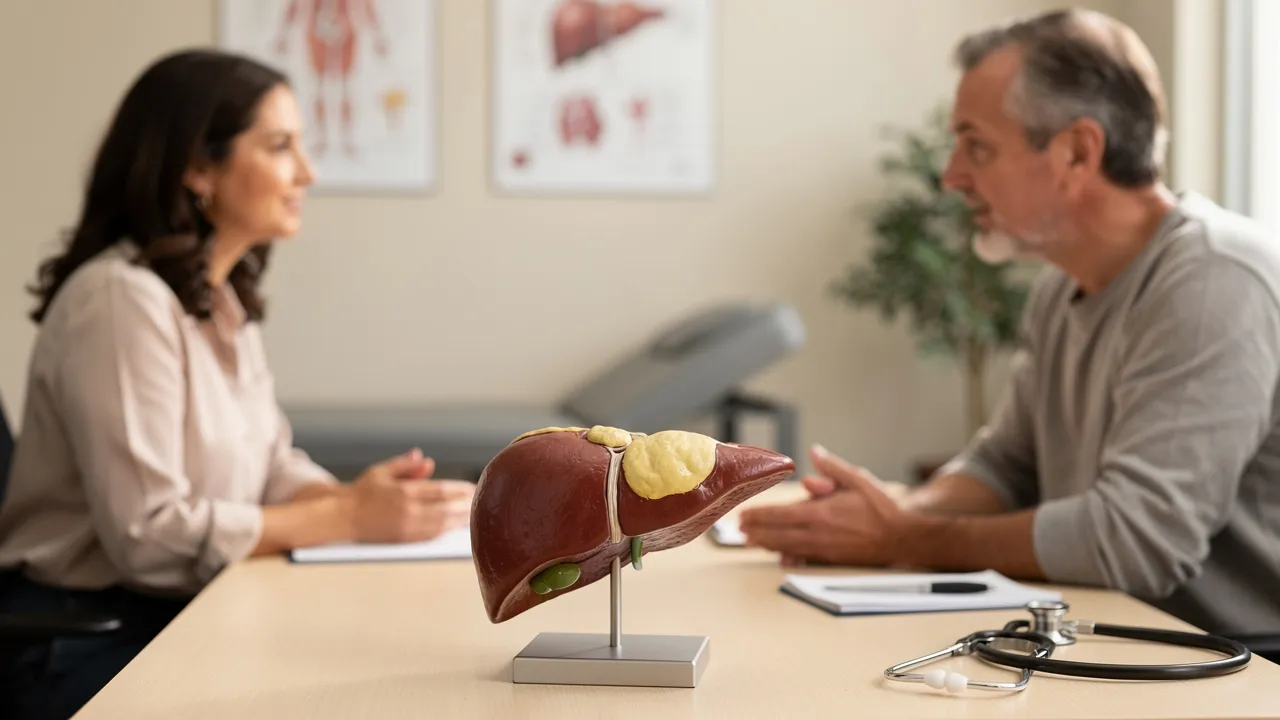
What “fat in the liver” describes
Fat in the liver means that fat has accumulated in liver tissue. The medical term is hepatic steatosis. That finding describes fat accumulation, but it does not by itself tell you whether inflammation, liver damage, or scarring is present. Fatty liver disease exists on a spectrum from simple fatty liver to an inflamed form called steatohepatitis.
Medical terminology has also changed. NAFLD is now called metabolic dysfunction-associated steatotic liver disease, or MASLD, and NASH is now called metabolic dysfunction-associated steatohepatitis, or MASH. You may still see the older terms in earlier records and health information.
In the United States, fatty liver disease prevalence has been reported at 10% to 46%. That population estimate is not a personal probability. MASLD refers to liver fat plus at least one cardiometabolic risk factor and no other identified cause of secondary liver-fat accumulation. The listed risk factors include a BMI above 25, prediabetes or diabetes, hypertension, hyperlipidemia, or low HDL.
MetALD is a related term for MASLD accompanied by high alcohol intake. The cited terminology describes that intake as 140 grams of alcohol per week in females or 210 grams per week in males. Those thresholds describe terminology used in the cited source; they do not determine your diagnosis by themselves.
A FIB-4 result is one factor a clinician may use when assessing the possibility of advanced fibrosis. The cited guidance says that patients with a FIB-4 of 1.3 or higher should receive a secondary assessment, preferably with VCTE or MRE. Do not use a number from a personal report to decide your condition or next treatment without clinical interpretation.
Possible contributors and why evaluation matters
Metabolic dysfunction-associated steatotic liver disease is closely linked with obesity, insulin resistance, metabolic syndrome, type 2 diabetes, high cholesterol, and high triglycerides. Long-term heavy alcohol use can also contribute to fatty liver. Alcohol-related disease combined with metabolic risk factors can increase the risk of progressive fibrosis and cirrhosis.
Less common contributors can matter too. Rare hereditary, intestinal, endocrine, and drug-related conditions may underlie, mimic, or aggravate fatty liver disease. That is one reason a clinician may ask about your medical history, alcohol use, medications, supplements, and other health conditions rather than assuming that every case has the same cause.
Associated conditions can include hepatitis B or C, autoimmune liver conditions, and certain genetic conditions, in addition to metabolic risk factors and alcohol use. NAFLD is also associated with higher cardiovascular risk. A scientific statement reports that cardiovascular disease is the leading cause of mortality among patients with NAFLD.
Evaluation therefore has two purposes: it can help clarify what may be affecting the liver, and it can bring related metabolic and cardiovascular concerns into the same clinical conversation. The presence of a risk factor does not establish that you have fatty liver disease.
A scientific statement reports that 10% to 25% of patients with NAFLD may develop NASH, which can lead to cirrhosis, liver cancer, and liver failure. The percentage describes a population-level estimate, not a forecast for you. Your risk depends on the cause, the amount of inflammation or scarring, other health conditions, alcohol exposure, and what a clinical evaluation finds.
Symptoms are clues, not confirmation
Early metabolic fatty liver often causes few or no symptoms. When symptoms occur, possible early clues include fatigue, low energy, sluggishness, or mild discomfort or fullness in the upper-right abdomen. These experiences can also occur with many other conditions and ordinary problems such as poor sleep.
Symptoms alone cannot confirm fatty liver disease. If you have persistent symptoms, a clinician may need to consider your history, examination, blood tests, and possibly imaging rather than treating fatigue or abdominal discomfort as a diagnosis.
Risk factors for fatty liver disease include obesity, excess abdominal weight, type 2 diabetes, prediabetes, abnormal cholesterol or triglycerides, metabolic syndrome, hypothyroidism, and a family history of liver disease. These factors can make evaluation more useful even when you feel well.
Fatty liver disease typically means that excess fat has accumulated in liver cells, affecting at least 5% of liver cells when assessed by histology or validated non-invasive measures. That threshold describes how the condition may be identified; it does not tell you how much inflammation or scarring may be present.
One published estimate says fatty liver can take 10 to 30 years to become cirrhosis, while also emphasizing that the pace varies with genes, lifestyle habits, untreated health problems, and alcohol use. That estimate is not a personal forecast. A normal-feeling day does not establish that the liver is unaffected, and a symptom does not establish advanced disease.
How quickly fatty liver can develop or progress
Metabolic fatty liver typically develops gradually over months to years and is linked to obesity, type 2 diabetes, and metabolic syndrome. Alcohol-related fatty liver can develop within weeks to months of sustained heavy drinking.
The different timelines reflect different causes and patterns of exposure. They do not let you determine whether liver damage is present from timing alone.
Progression from simple steatosis to advanced fibrosis or cirrhosis is variable and unpredictable; when it occurs, it usually unfolds over many years. Some people may have liver fat without meaningful damage, while others need assessment for inflammation or scarring.
If risk factors, concerning symptoms, abnormal liver tests, or an imaging finding raise concern, discuss evaluation with a qualified clinician rather than waiting for a particular amount of time to pass.
The time since a possible risk factor began cannot show which stage of liver disease is present. Metabolic fatty liver may develop slowly, while alcohol-related changes may appear over a shorter period of sustained heavy drinking. Even then, timing does not replace an assessment of your history, test results, and possible causes.
Use the timeline as background for a clinical conversation, not as a way to rule out concern because a symptom is new or to assume advanced disease because a risk factor has lasted for years.

From fat accumulation to liver damage
Fatty liver disease describes a spectrum rather than one fixed level of illness. The stages of fatty liver disease include:
- Steatosis: fat is present in the liver, with little or no inflammation or liver damage.
- MASH: fat is accompanied by inflammation and liver damage.
- Fibrosis: liver damage has produced scarring, although the liver may still work well.
- Cirrhosis: severe scarring and damage affect how well the liver works and can cause serious health problems.
Simple fatty liver usually does not progress to liver damage or complications, while MASH can cause fibrosis that may progress to cirrhosis and liver cancer.
The distinction between fat, inflammation, and scarring matters because the same phrase may appear in records for people with very different levels of liver involvement. Imaging may show fat, but additional evaluation may be needed to assess scarring or other causes. A finding of liver fat should therefore lead to a focused clinical discussion, not an assumption about your stage.
Population statistics show why metabolic health is part of the discussion. NAFLD may be present in up to 75% of people who are overweight and in more than 90% of people who have severe obesity. One-third to two-thirds of people with type 2 diabetes may have NAFLD.
These figures describe groups, not your individual result. They indicate why diabetes, weight-related health concerns, cholesterol, triglycerides, blood pressure, and glucose history may be relevant during evaluation.
What a clinical evaluation may include
A clinical evaluation may begin with your medical history and a physical examination. Blood tests may assess liver function and check for other causes of liver disease. Imaging tests may show liver fat.
The evaluation may include:
- Blood tests to assess liver-related findings and look for other causes.
- Ultrasound, CT, or MRI to look for liver fat and other structural findings.
- Elastography to assess liver stiffness and possible scarring.
- Biopsy in selected situations when other results suggest MASH or remain unclear.
No single symptom, lab value, or scan should be treated as a complete interpretation without the surrounding clinical context.
Transient elastography measures liver stiffness, which can be a sign of scarring. Magnetic resonance elastography maps tissue stiffness. These tests assess different features from an image that simply shows liver fat.
A liver biopsy may be suggested when other tests show signs of MASH or when results are unclear. In most people, non-invasive imaging tests are used instead. A biopsy decision belongs in a clinician-led discussion about what the existing results show and what question still needs an answer.
Current recommendations described in the selected guidance call for people with diabetes to be screened for advanced fibrosis every 1 to 2 years and for people with NAFLD to be screened for diabetes. The appropriate schedule for you depends on your health history and clinical findings.
A study described in a 2024 article followed 5,123 people with MAFLD for a median of 6.4 years and reported a 3% risk of progression to cirrhosis after 15 years. A systematic review reported that NAFLD affected almost 25% of adults worldwide. These population findings provide context; they cannot interpret your tests or predict your course.
Different parts of an evaluation answer different questions. Blood tests may assess liver function and look for other causes. Ultrasound, CT, or MRI may show liver fat. Elastography focuses on tissue stiffness, which can indicate scarring, while a biopsy examines a small tissue sample when other findings leave an important question unresolved.
That distinction explains why a scan that mentions liver fat may lead to more discussion without immediately establishing the amount of inflammation or fibrosis. Ask what each proposed test is intended to clarify and how its result would fit with your history and other findings.
Prepare for a focused clinician discussion
A focused clinician discussion is appropriate if you have risk factors, concerning symptoms, or abnormal liver tests. Even mildly elevated liver enzymes may indicate early inflammation and should be discussed with a qualified clinician.
Bring the information that can help the discussion stay specific:
- When symptoms began, how often they occur, and whether they are changing.
- Any history of diabetes, prediabetes, cholesterol or triglyceride concerns, blood pressure problems, thyroid disease, or liver disease.
- Your typical alcohol use, described as accurately as you can.
- Current medications, supplements, and recent changes.
- Prior blood tests, imaging reports, or relevant family history.
Your questions can focus on what the finding means and what needs clarification. You might ask:
- Does the available information show liver fat, inflammation, scarring, or something else?
- Are additional blood tests or imaging needed to assess possible causes or fibrosis?
- Which results should be monitored, and on what schedule?
- Which health conditions or medications should be considered as part of the assessment?
- What general care topics are appropriate for your health history?
Use the appointment to understand the evaluation plan rather than trying to label the condition from a single report.
A short written timeline can make the conversation more efficient. Start with the reason for your concern, then list relevant symptoms, when they began, and any test or imaging language that prompted questions. Add health conditions, alcohol-use context, medications, supplements, and family history that may affect the assessment.
You do not need to interpret the information before the visit. Your goal is to give the clinician enough context to decide whether further history, examination, blood tests, imaging, or another form of evaluation is appropriate.

General care topics to discuss without chasing a quick fix
General care discussions may include a healthy eating pattern, limiting alcohol and sugary drinks, maintaining a healthy weight, and regular physical activity. These are discussion topics, not an individualized prescription.
A clinician may help you adapt the conversation to your health history, current abilities, medications, and any findings that need attention. Avoid treating a general list as a reason to make abrupt changes or to replace an evaluation.
Physical activity can benefit liver and cardiometabolic health independently of weight loss. The cited review says activity should be tailored to your preferences and physical abilities.
That means the useful question is not whether you can follow someone else’s routine. Ask what level and type of activity fits your current health, symptoms, and physical capacity. If you have not been active regularly or have a health condition that affects exertion, raise that context during the discussion.
If weight loss is part of your care, cited guidance recommends doing it gradually because rapid weight loss and malnutrition can worsen liver disease. The same guidance says losing at least 3% to 5% of body weight can reduce liver fat, while losing up to 7% to 10% may be needed to reduce liver inflammation and fibrosis.
Those percentages describe guidance for fatty liver disease, not a target you should set without clinical context. Ask how any weight-related plan should account for your nutrition, medical history, medications, and pace of change.
The practical boundary is to discuss the reason for each change instead of chasing a quick fix. General guidance describes healthy food choices, reasonable portions, limiting alcohol and sugary drinks, and regular activity, while also warning that rapid weight loss and malnutrition can worsen liver disease.
A plan that fits your medical history may differ from a general checklist. Bring questions about pace, nutrition, activity, alcohol, and any current treatment to a qualified clinician before treating a broad recommendation as your personal plan.
When to arrange qualified evaluation
Qualified evaluation is a sensible next step when you have risk factors, persistent or concerning symptoms, abnormal liver tests, or imaging that mentions liver fat. Even mildly elevated liver enzymes may indicate early inflammation, so they deserve a discussion rather than dismissal.
Arrange routine evaluation when the concern is non-urgent, and bring the focused information listed above. A clinician can decide which history, examination, blood tests, or imaging are relevant to your situation.
Do not rely on symptoms alone to judge the amount of liver damage. For this concern, keep the next step focused: no out of scope parts are needed beyond relevant symptoms, risk factors, test information, and urgency.
Use the reason for your concern to choose a practical next step:
- A report mentions liver fat or bloodwork is abnormal: arrange a clinician discussion and bring the report or results.
- You have risk factors or ongoing symptoms without testing: arrange a routine evaluation rather than trying to confirm the condition from symptoms.
- The situation feels urgent: seek prompt qualified medical help instead of waiting for a routine appointment.
This approach keeps the focus on appropriate evaluation without turning a general explanation into a diagnosis.
Choose an informed next step for your liver-health questions
Your next step can be practical: write down what prompted your concern, collect relevant results and medication information, and prepare two or three questions about evaluation. A qualified professional decides individual suitability for testing, monitoring, and care. Bring that focused information to your next clinical conversation.
Questions to consider before discussing fat in the liver with a clinician
When should I seek urgent help for possible fatty liver disease?
Seek prompt qualified medical help if symptoms are severe, rapidly worsening, or feel urgent rather than waiting for a routine appointment. When in doubt, contact a qualified medical professional or the appropriate emergency service promptly.
What information should I bring to a fatty liver evaluation?
Bring any bloodwork or imaging reports, a timeline of symptoms, your medical and family history, an accurate description of alcohol use, and a complete list of medications and supplements. You can also ask what each proposed test is intended to clarify, whether scarring or inflammation needs assessment, and which findings should be monitored.
Can fatty liver improve without a personalized treatment plan?
General care discussions may include a healthy eating pattern, regular physical activity suited to your abilities, limiting alcohol and sugary drinks, and gradual weight management when appropriate. These are not individualized instructions, and rapid weight loss or malnutrition can worsen liver disease. Discuss changes with a qualified clinician before treating general guidance as your personal plan.
Ready for a real plan?
Work directly with Dr. Misra — no insurance, no rush.
Misra Wellness is a virtual-first Direct Primary Care practice serving California and New York. Book a meet & greet to see if we're the right fit.
Book a meet & greet