
fatty liver disease
Fatty Liver Disease: How to Recognize the Clues and Choose the Right Next Step
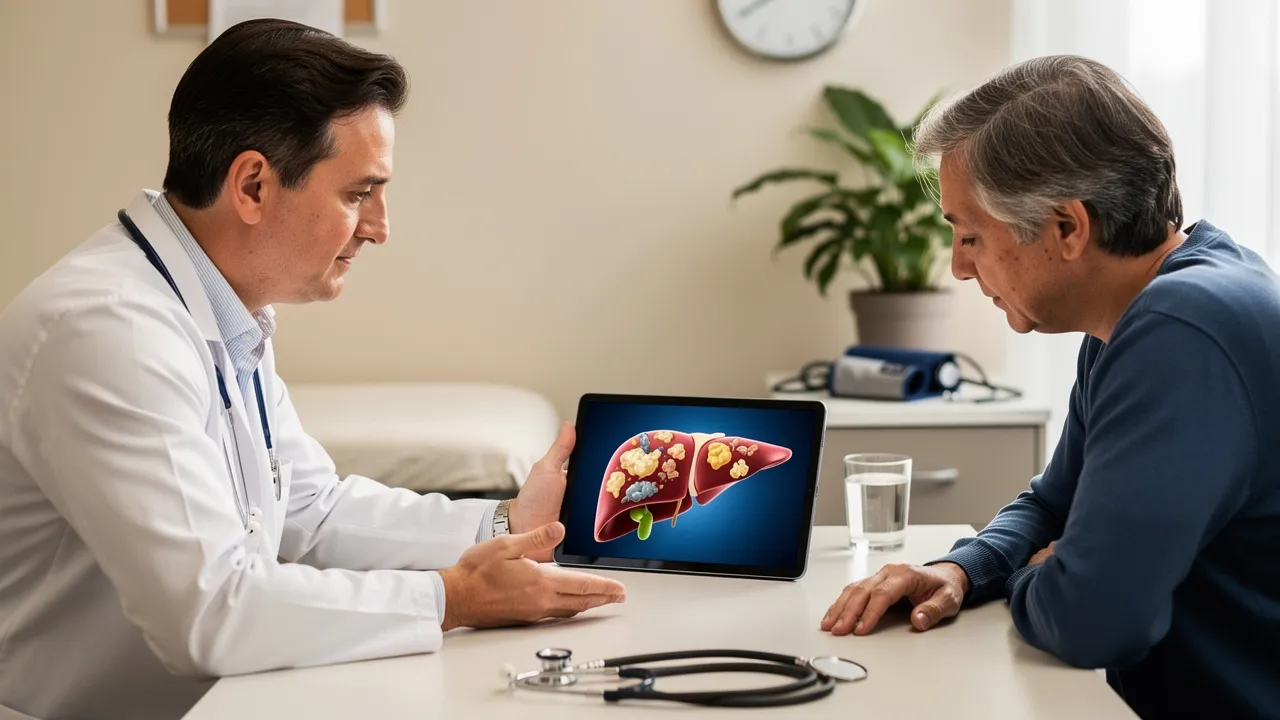
What fatty liver disease means for metabolic health
Fatty liver disease describes a condition in which fat builds up in the liver. A common metabolic form is called metabolic dysfunction-associated steatotic liver disease, or MASLD; it was formerly called nonalcoholic fatty liver disease, or NAFLD. MASLD is defined by liver fat alongside at least one cardiometabolic risk factor and no harmful alcohol intake.
Cardiometabolic risk factors are health conditions connected with blood sugar, blood fats, blood pressure, and body-fat distribution. This connection matters because liver fat is not always an isolated finding. MASLD can range from steatosis, meaning fat in the liver, to metabolic dysfunction-associated steatohepatitis, or MASH, in which inflammation is present. The broader spectrum can also include fibrosis, cirrhosis, and MASH-related liver cancer.
A scan or laboratory result that raises a question about liver fat does not, by itself, show where you are on that spectrum. The next useful step is to separate the finding from its possible causes, then assess whether inflammation or scarring may be present. Your symptoms, health history, alcohol intake, medications, metabolic conditions, laboratory results, and imaging each add different information.
The practical starting point is simple: treat liver fat as a reason to understand the wider health picture, not as a diagnosis you can confirm from a symptom checklist. A qualified clinician can help connect the finding with the rest of your medical history.
Which health factors may raise the likelihood
Metabolic health factors can raise the likelihood of MASLD, but they do not establish that you have it. The factors most often associated with the condition include:
- Excess weight, particularly excess belly fat.
- High triglycerides or high LDL cholesterol.
- Prediabetes or type 2 diabetes.
- High blood pressure.
- Insulin resistance.
- Metabolic syndrome or some of its related traits.
Type 2 diabetes makes you more likely to develop the condition, and abnormal blood fats are also closely linked with it. Metabolic syndrome describes a pattern of metabolic risk factors rather than a single symptom, so your clinician may consider several measurements together instead of focusing on one result.
These factors can overlap. For example, high blood pressure, type 2 diabetes, high cholesterol, and obesity are linked with metabolic syndrome, while insulin resistance may accompany changes in blood sugar or body composition. The overlap explains why an evaluation often looks beyond the liver and reviews your broader cardiometabolic health.
A risk factor is a reason to discuss evaluation, not proof of liver disease. If you recognize several of these factors, bring that context to a clinician rather than trying to determine your diagnosis from the list. If you have none of them, symptoms or an unexpected test result may still deserve a clinical discussion.
Why symptoms are clues, not a diagnosis
MASLD can happen without symptoms, and most people with MASLD do not develop liver damage. That quiet pattern is one reason you may first hear about liver fat after routine blood work or an imaging study performed for another reason.
When symptoms occur, they may include:
- Fatigue.
- Discomfort in the upper-right abdomen.
- Unexplained weight loss.
Those symptoms have many possible explanations. Fatigue cannot identify the liver as the source of a problem, and upper-right abdominal discomfort does not show whether liver fat, inflammation, or scarring is present. Unexplained weight loss also needs context rather than an automatic connection to MASLD.
Advanced liver disease can cause jaundice, dark urine, or abdominal swelling, but these signs also require qualified medical assessment. They are not a way to determine the stage of disease at home.
Symptoms alone cannot establish whether you have MASLD. The absence of symptoms cannot rule it out either. Use symptoms as information to share, including when they began, whether they are changing, and what else was happening at the time. Then let a clinician combine that history with examination, laboratory testing, and imaging when appropriate.
Why liver fat deserves clinical attention
Liver fat deserves attention because MASLD can exist along a spectrum that includes inflammation, fibrosis, cirrhosis, and liver cancer. The presence of liver fat does not mean that you have advanced disease, but it does make the question of disease stage worth addressing.
The American College of Gastroenterology describes about 20% of people with MASLD as having MASH, the more severe form that involves liver inflammation. The same source reports that about 20% of people with MASH may develop cirrhosis or end-stage liver disease. These percentages describe groups of people with the named conditions; they do not predict your personal outcome.
The concern also extends beyond the liver. Heart disease is the number one cause of death among people with MASLD, so evaluation may need to include blood pressure, blood sugar, blood fats, and other cardiometabolic factors rather than concentrating only on liver enzymes.
A position statement on metabolic-associated fatty liver disease describes the condition as affecting one in four adults globally and links it with type 2 diabetes, cardiovascular disease, lifestyle-related cancers, progressive liver disease, and liver cancer. That estimate measures prevalence across a global population, not your individual likelihood.
Evidence suggests that at least 5% weight reduction may reduce liver fat, 7% to 10% may improve liver inflammation, and at least 10% may improve fibrosis or scarring; these figures are not personal targets or promises.

What a first clinical evaluation may include
A first clinical evaluation for possible MASLD usually connects your history with objective testing. A clinician may review alcohol intake, screen for metabolic conditions, and exclude other liver diseases. A physical examination may look for signs related to metabolic health or advanced liver disease.
The evaluation may include:
- Blood tests to look for liver injury or inflammation, assess liver-related measurements, and consider other causes of liver disease.
- Imaging such as ultrasound, CT, or MRI to identify liver fat or other findings.
- A review of conditions such as diabetes, prediabetes, high blood pressure, or abnormal cholesterol and triglycerides.
- A check for other possible causes of liver fat, including excessive alcohol use, certain medications, and other liver diseases.
Liver fat is often identified after it appears incidentally on imaging or after liver chemistries are elevated. A finding from either route needs context before it becomes a diagnosis. General population-based screening for NAFLD is not advised.
The American College of Gastroenterology describes up to 30 out of 100 people, or over 100 million American adults, as having MASLD. That figure measures estimated prevalence in the American adult population; it does not mean that every person with a risk factor needs the same testing pathway.
For people with prediabetes, type 2 diabetes, or two or more metabolic risk factors, clinicians should repeat FIB-4 risk assessment every 1–2 years. Your clinician can explain whether that interval applies to your situation and what information the assessment uses.
One useful way to understand the sequence is to separate the questions each part of the evaluation addresses. Imaging can identify or suggest liver fat, while history and blood tests help a clinician consider liver injury and other possible causes. Fibrosis-risk tools such as FIB-4 then help determine whether further noninvasive assessment or specialist evaluation may be appropriate. These tools are complementary, not interchangeable: a normal liver enzyme result does not by itself exclude significant fibrosis, and a finding of liver fat does not identify its cause or show the full disease stage. Ask what question each test is intended to answer and what result would change the next step.
How clinicians assess fibrosis risk
Fibrosis risk assessment looks for liver scarring that may not be obvious from symptoms or routine results. Normal liver enzyme levels do not by themselves exclude clinically significant fibrosis or advanced disease, so a normal result should be interpreted with the rest of your evaluation.
Clinicians may use the validated FIB-4 blood-based tool as an initial assessment of advanced-fibrosis risk. FIB-4 uses age, aminotransferase results, and platelet measurements to help determine whether additional assessment is appropriate. It is a risk-assessment tool, not a diagnosis and not a result to interpret in isolation.
VCTE and MRE are noninvasive stiffness assessments; elastography estimates liver stiffness and provides a noninvasive alternative to liver biopsy. The choice depends on the clinical setting, available testing, and the rest of your results.
A clinician may consider liver biopsy when noninvasive results are unclear, diagnostic uncertainty exists, cirrhosis is strongly suspected, or ALT and AST remain elevated for more than 6 months. Biopsy is therefore not an automatic next step after every finding of liver fat.
Suspected advanced disease or discordant noninvasive test results should prompt specialist evaluation. Clinicians should also consider advanced-fibrosis screening for people with type 2 diabetes, medically complicated obesity, a family history of cirrhosis, or more than mild alcohol consumption.
If your FIB-4 is less than 1.3, you may be followed in primary care, with reassessment every 1–2 years for certain metabolic-risk groups. The number is meaningful only within the assessment method and clinical context that produced it.

What to discuss as part of management
MASLD management addresses more than liver fat. A useful clinical discussion can connect diet quality, physical activity, alcohol intake, smoking, sleep, sedentary behavior, blood sugar, blood pressure, cholesterol, and triglycerides.
Bring these topics into one conversation:
- Ask how diet quality fits your health history and metabolic goals.
- Discuss physical activity and how to choose an amount that fits your current abilities and health conditions.
- Review alcohol intake, smoking, sleep, and long periods of sitting.
- Ask how diabetes, prediabetes, high blood pressure, or abnormal cholesterol should be managed alongside liver findings.
- Review every medication and supplement, including products you started without a prescription.
- Ask whether medication has a role in your situation and what the intended outcome would be.
Treatment depends on the underlying cause and may include lifestyle changes, medication, and management of cholesterol and diabetes. That description is a set of possible management categories, not an instruction to start, stop, or change anything on your own.
Lifestyle care may address diet, physical activity, sedentary behavior, smoking, alcohol intake, and sleep together. A connected plan can make the discussion more useful because these factors relate to both liver concerns and broader cardiometabolic health. Use the appointment to clarify priorities, follow-up testing, and which changes should happen first.
Bring questions about the purpose of each recommendation. You should know whether a proposed change is intended to address liver fat, inflammation, fibrosis risk, blood sugar, blood fats, blood pressure, or another part of your health.
Management discussions also benefit from separating a treatment category from a personal recommendation. The fact that medication may be part of treatment does not mean a particular medication is appropriate for you. A clinician can consider the underlying cause, metabolic conditions, current medicines and supplements, and how follow-up will be assessed. The same principle applies to diet and activity: evidence can identify topics to discuss, but the suitable approach depends on your health history and current abilities. Ask which finding an option is meant to address and how you will know whether the plan needs to change. This keeps liver-related questions connected to broader cardiometabolic care without turning general evidence into a self-directed prescription.
How to interpret weight and activity evidence
Weight and activity evidence can inform a clinical conversation without becoming a self-prescribed formula. Research supports regular structured moderate-to-vigorous aerobic exercise for 150–240 minutes per week in MASLD lifestyle management, and some liver and cardiometabolic benefits may occur even without weight loss.
Another evidence summary emphasizes 150–240 minutes per week of moderate-to-vigorous activity. These ranges differ in their framing and minimum duration, so treat them as evidence to discuss rather than as a universal prescription.
Weight-related findings also describe more than one outcome. Your starting health, medications, mobility, eating pattern, and other conditions affect what is appropriate.
A practical discussion can focus on questions such as:
- Which activity type and intensity fit your current health?
- How can you increase movement without treating a scale change as the only measure of progress?
- Which nutrition approach is realistic for your health history and daily schedule?
- Which laboratory or imaging findings will be used for follow-up?
- What would make the plan change if your symptoms, laboratory results, or activity tolerance change?
The useful conclusion is not that you must reach one number. Activity and diet quality may matter even when weight does not change, while the appropriate plan still needs clinical context.
Also keep the outcome in view: evidence about exercise often measures liver fat, while weight-loss research may discuss inflammation or scarring. A change in liver fat is therefore not the same as proof that fibrosis has improved. Follow-up should use the measures your clinician selects rather than treating activity minutes or a scale reading as a complete assessment. If the purpose is to lower liver fat, ask how that outcome will be checked; if the concern is fibrosis, ask whether a fibrosis-risk tool or stiffness assessment is planned. This distinction can make follow-up questions more precise.
Why cleanses and unsupervised supplements are poor substitutes for care
Liver cleanses and unsupervised supplements are poor substitutes for an evaluation because they do not answer whether liver fat, inflammation, fibrosis, or another condition is present. Liver cleanses are not FDA regulated, lack clinical evidence, and do not reverse liver damage from overeating or alcohol. Some supplements can cause liver injury.
Lifestyle care is central to MASLD management, but supplements are not a cure. Vitamins, herbs, powders, and combination products should be reviewed with your healthcare team before you start them, particularly when you have abnormal liver tests or take other medicines.
Before discussing a supplement, write down its name, ingredients, dose, and reason for use. Bring that list to your healthcare team. Ask whether the product has a role in your care and how its use would be monitored.
Do not use a cleanse as a way to postpone evaluation after an abnormal liver test or imaging finding. Do not use a supplement as a replacement for management of diabetes, cholesterol, blood pressure, or other conditions linked with liver health. A clinical discussion can distinguish a product that needs review from a treatment category that may have a place in a broader plan.
Why there is no single timeline for fatty liver disease
Changes in liver fat, inflammation, or scarring do not follow one fixed timeline. The exact healing time depends heavily on disease stage, daily dietary habits, and other individual factors. A simple estimate cannot tell you how quickly your liver findings will change or whether the same approach will produce the same result for you.
The amount and type of activity discussed in research also vary, but those findings do not provide a personal timeline for recovery.
A fixed deadline is not a sound basis for personal decisions. Liver fat, inflammation, fibrosis, metabolic conditions, medications, alcohol intake, activity, and diet can change at different rates. Improvement in one measure may not answer every question about disease stage.
Use follow-up testing and clinical review to assess change rather than relying on how you feel or on a fixed deadline. Ask which outcome is being measured, when it will be reassessed, and what would lead to a different evaluation. That approach keeps the timeline connected to your actual findings.
When to arrange evaluation and seek prompt help
Arrange a clinician-led evaluation if an imaging study shows liver fat, liver chemistries are elevated, or your health history gives you a meaningful reason to discuss MASLD. Bring the actual report or laboratory results when possible, because the wording and values can shape what happens next.
Jaundice, dark urine, or abdominal swelling should prompt contact with a qualified professional rather than a cleanse, a supplement, or a wait-and-see plan based only on online information.
If you have no symptoms but have several metabolic risk factors, ask whether an evaluation is appropriate rather than trying to screen yourself with a home test. General population-based screening is not advised, so your clinician can help determine whether your history, findings, or risk factors support further assessment.
If an evaluation has already begun, ask what the next result means and when follow-up should occur. Symptoms can point to a need for attention, but they cannot establish your diagnosis or disease stage. Prompt help is the right response to concerning signs; a planned clinical discussion is the right response to a risk factor, incidental finding, or question about next steps.
Bring the right information to your clinical discussion
Your clinical discussion will be more focused if you bring the information that helps connect symptoms, risk factors, testing, and possible management. Prepare a short record with:
- Prior liver-related blood tests and imaging reports, including dates if available.
- Your current medications, vitamins, herbs, and other supplements.
- Your alcohol intake and any recent change in that pattern.
- Diagnosed or suspected diabetes, prediabetes, high blood pressure, abnormal cholesterol, or other metabolic conditions.
- Symptoms such as fatigue, upper-right abdominal discomfort, unexplained weight loss, jaundice, dark urine, or abdominal swelling, including when they began.
- Questions about FIB-4, elastography, repeat testing, specialist evaluation, and what each result could change.
- Questions about diet quality, activity, alcohol, smoking, sleep, sedentary behavior, and medication options.
A qualified professional decides whether you have MASLD, whether fibrosis assessment is needed, and which management options fit your health history.
A clinician-led discussion can address suspected liver fat, evaluation questions, and the next appropriate step. A consultation request does not establish a diagnosis or treatment plan, and no appointment time is reserved.
Questions to clarify before discussing fatty liver disease
Can fatty liver disease be present with normal liver enzymes?
Yes. Normal aminotransferase or liver enzyme levels do not by themselves exclude clinically significant fibrosis or advanced disease. A clinician may interpret those results alongside your medical history, metabolic risk factors, physical examination, imaging, and fibrosis-risk assessment.
Does fatty liver disease always progress to cirrhosis?
No. Fatty liver disease can range from liver fat without apparent damage to inflammation, fibrosis, cirrhosis, and liver cancer. Progression is not inevitable, but the presence of liver fat can justify evaluating fibrosis risk and addressing related metabolic conditions with a qualified clinician.
Is fatty liver disease reversible?
Improvement may be possible, but the outlook depends on the disease stage and individual circumstances. Research links weight reduction, improved diet quality, and regular physical activity with improvements in liver fat and inflammation, while scarring may respond differently.
Ready for a real plan?
Work directly with Dr. Misra — no insurance, no rush.
Misra Wellness is a virtual-first Direct Primary Care practice serving California and New York. Book a meet & greet to see if we're the right fit.
Book a meet & greet